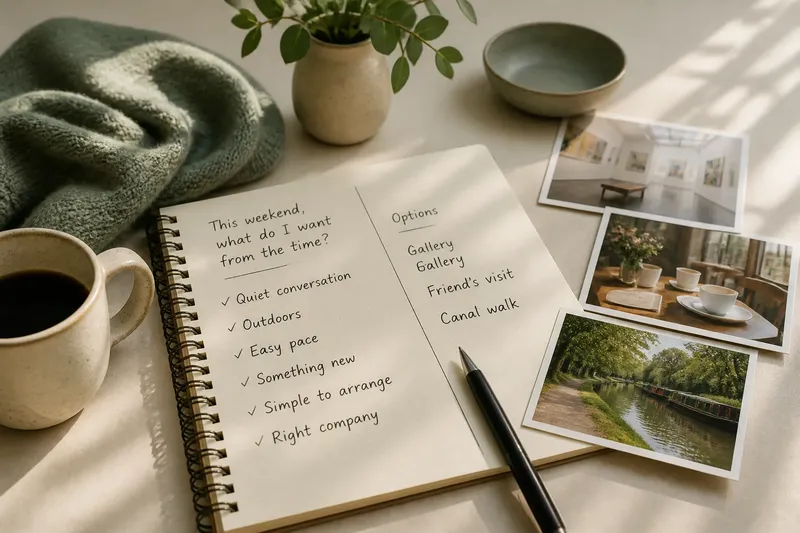
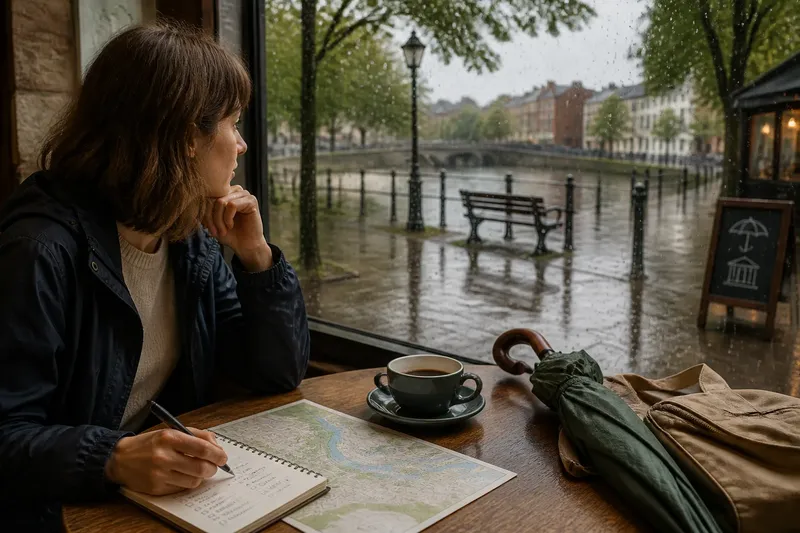
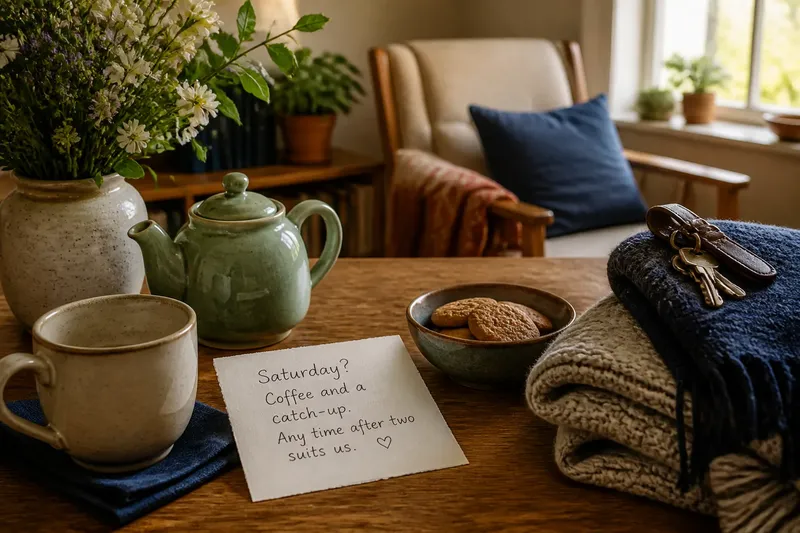
Why a Single Plan Can Give a Free Day Its Shape
A single plan for a free day gives the hours a centre without filling them; learn how to choose an anchor and leave room for the unplanned.
How do you give a free day some shape without turning it into a timetable? A single plan for a free day can act as an anchor: one activity worth getting ready for, with the hours around it left open. The useful question is not how much you can fit in, but what would make the day feel distinct.
1. Choose a centre, not a programme
An anchor activity is the one thing the day can gather around. It might be a matinee, a swim, a long lunch with someone you already know, or time set aside to browse a particular bookshop. It need not occupy the whole day or deserve an elaborate introduction.
Choose something with a clear beginning and an easy stopping point. “See the afternoon performance” gives the day a centre; “have a full cultural day” quietly recruits several more decisions. A single plan works best when it stays single.
2. Give the plan a useful scale
A good anchor is substantial enough to distinguish the day from an ordinary errand, but not so large that everything else becomes subordinate to it. Consider the attention it asks for as well as the time: a lively social event can leave less room afterwards than a quiet visit to a garden.
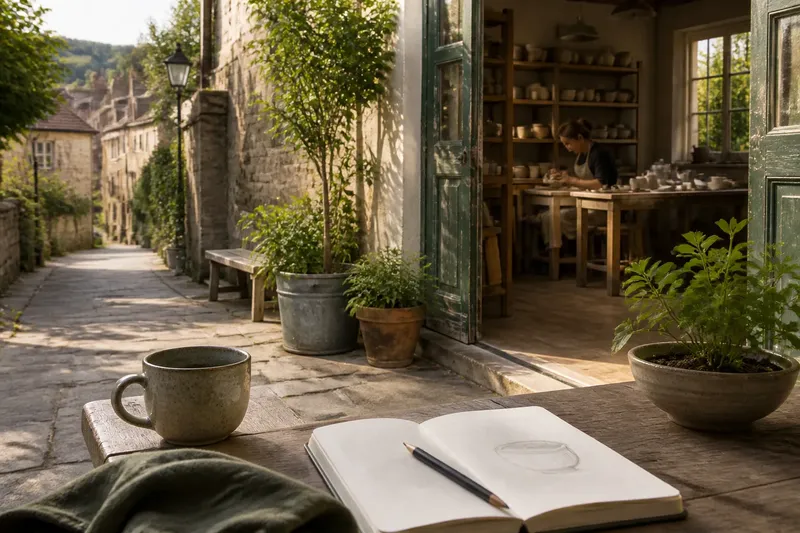
Imagine you have a free Saturday and want to visit a ceramics studio open to visitors. You decide that the studio is the day’s one fixed activity, check its opening arrangements, and leave the rest unassigned. The expected result is a day with a reason to begin, but no pressure to turn the visit into a chain of nearby stops.
3. Put the fixed point in the right place
The anchor’s timing affects the feel of the whole day. A morning commitment can make the remaining hours feel spacious, while an evening booking leaves the earlier part available for a slow start. Neither arrangement is inherently better; choose the one that suits your energy and the activity.
Allow for the ordinary edges around the plan: getting dressed, travelling, finding the entrance, or taking a pause afterwards. This is not a request to calculate every minute. It is a way to avoid treating the activity as if it begins at the door and ends the instant you leave.
4. Keep the edges deliberately open
Open time is not a gap that needs filling. It can hold a late breakfast, an unhurried journey home, a conversation that runs on, or a spell of doing nothing much. Leaving these possibilities undecided is part of the plan, not evidence that the plan has failed.
Think of the anchor as a paperweight on a loose sheet: it keeps the day from blowing away, but does not cover the page. If another appealing idea appears, you can follow it when it suits, rather than adding it in advance to make the day seem more complete.
5. Make the practical arrangements once
Some preparation protects the open quality of the day. Check whether the activity needs a booking, whether it has limited opening hours, and how you will get there. Keep the information somewhere easy to find, such as a note on your phone, then stop planning once the important details are settled.
- Confirm the activity’s opening or start time.
- Check whether booking or advance notice is needed.
- Choose a straightforward route and note any useful transport details.
- Decide what you need to bring, such as a library card, suitable footwear or a light layer.
- Leave the surrounding hours without extra appointments.
Requirements can vary by venue and activity, so follow the relevant venue information where it applies. The point is to remove avoidable uncertainty, not to build a second project called “preparing for a relaxing day”.
6. Let company fit the plan
An anchor can be shared, but it need not become a group itinerary. If you invite someone, offer the central activity as the invitation and let the rest remain flexible. This makes it easier for both people to enjoy the same event without negotiating every hour around it.
For a solo day, choose an activity that feels complete without an audience: browsing a specialist shop, attending a matinee, or taking a sketchbook to a place you already like. The measure is not whether the plan looks impressive to someone else. It is whether you would be glad to have made room for it.
7. Notice what the day needed
Afterwards, a brief reflection can help you choose future anchors. Ask whether the activity gave the day enough shape, whether its timing suited you, and whether the open hours felt restful or merely uncertain. There is no need to grade the day; one useful observation is plenty.
If the anchor felt too demanding, choose a gentler one next time or place it earlier. If the day drifted pleasantly, resist the urge to add more structure as a correction. A free day does not have to prove its value by producing a list of accomplishments.
Questions about one-plan days?
What counts as an anchor activity?
It is one chosen event or activity that gives the day a recognisable centre, such as a matinee or a visit to a particular place. It should be appealing in its own right, not merely a pretext for packing in errands.
Should the anchor be booked in advance?
Book when the venue or activity requires it, or when a reservation would make the day easier to approach. If no booking is needed, a simple note of the opening arrangements may be enough.
What if the plan is cancelled?
Let the original intention guide a replacement rather than rebuilding the day from scratch. If the aim was a quiet outing, for instance, you might choose another low-key activity or keep the day open.
Can an errand be the anchor?
It can, particularly if it is something you have been looking forward to or want to do without rushing. If it feels like routine maintenance, it may not provide the distinct centre you want from a free day.
A single plan for a free day is most useful when it makes one choice clear and leaves the rest negotiable. Choose an activity you genuinely want, settle the practical details, and let the unclaimed hours remain unclaimed. That small boundary can be enough to make the day feel intentional without asking it to perform.