Choosing a Weekend Outing by What You Want from It
Choose a weekend outing by the feeling you want from the day, then compare the options that can actually provide it without turning pleasure into homework.
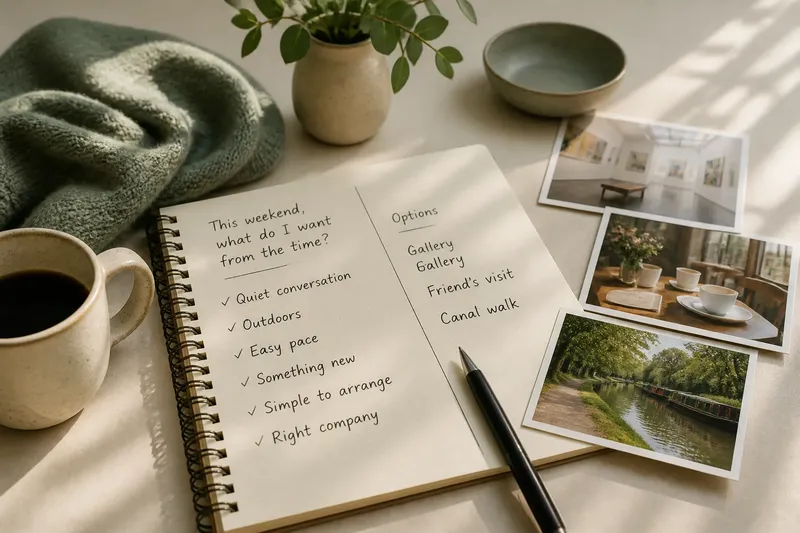
How do you choose a weekend outing when you want something different from each option? Start with the feeling you want from the time, not with a ranking of every appealing destination. That shifts the decision from “Which is best?” to “What would suit me today?”
Name the desired feeling
Pick a preference specific enough to distinguish between plans. “A change of scene” might point towards a gallery or a walk in a different neighbourhood; “easy company” could favour a relaxed visit with a friend over a busy event.
The preference can be modest. You might want to be absorbed in something, talk without rushing, get outdoors, or enjoy a little solitude. It is a description of what you want from this outing, not a permanent statement about your character.
Try phrasing it as an experience rather than a destination. “Spend time outside” gives you more useful options than “go to the park”, while “quiet conversation” can help distinguish a café visit from a crowded gathering.
Compare the experience
Now consider what each option is likely to feel like, not merely what it contains. A bookshop, a film and a garden centre may all sound pleasant, but they offer different kinds of attention, company and pace.
- Check what you want to feel during the outing; if the option clearly fits, keep it, and if not, set it aside for another mood.
- Check whether you want company or solitude; if the plan allows for that, keep it, and if it depends on unwanted social time, choose a quieter alternative.
- Check whether you want to be active or mostly still; if the activity suits your energy, keep it, and if it asks for more than you want to give, choose a gentler option.
- Check whether you want novelty or familiarity; if the plan offers the right balance, keep it, and if it feels too predictable or demanding, consider a different setting.
- Check what the outing requires from you before the enjoyable part begins; if the arranging feels acceptable, keep it, and if it dominates the experience, choose a simpler plan.
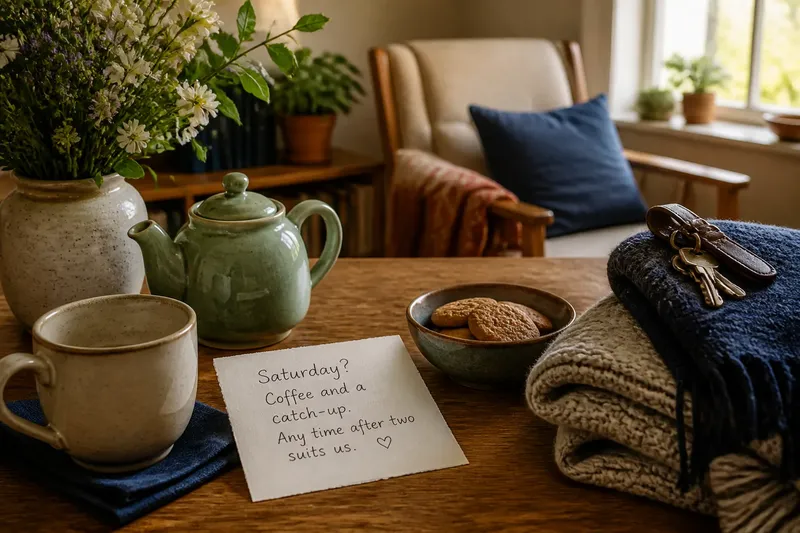
- Check whether the other person, if there is one, wants a similar kind of time; if your preferences overlap, proceed together, and if they do not, agree on a different outing or make separate plans.
These are prompts, not a scoring system. Think of them as choosing a book by the sort of evening you want: the thickest volume is not automatically the right one.
Separate liking from choosing
You can like several ideas without choosing all of them now. Keeping that distinction clear prevents a pleasant possibility from turning into an obligation merely because you thought of it.
Say you have a free afternoon and are considering a gallery, a friend’s invitation and a walk beside the canal. You want quiet conversation, have no particular appetite for an exhibition, and learn that your friend is free for a relaxed visit; choosing the visit fits the preference, while the gallery and canal walk remain options for a day when you want more solitude or fresh air.
That decision does not require a verdict on which option is best in general. It answers a smaller question: which one offers the experience you want from this particular outing?
Choose by preference?
What if I cannot name a preference?
Start with a contrast: company or solitude, indoors or outdoors, familiar or new. If neither side feels more appealing, pick the option that is easiest to change or leave, rather than demanding a more precise answer from yourself.
What if two outings fit equally well?
Compare the experience each offers, such as conversation, movement or focused attention. If they still seem equally suitable, choose the one you are more curious about today and save the other for a different occasion.
How do I choose with someone else?
Each person can name what they want from the outing, then look for the overlap. If one plan would leave someone merely tagging along, choose a different shared activity or take turns shaping plans on separate occasions.
What if my mood changes?
If the plan can be adjusted without disrupting anyone else, change it to match your new preference. If it depends on a booking, another person or a fixed event, decide whether keeping the commitment still feels worthwhile and communicate promptly if you need to withdraw.
Let the choice stay small
A preference can guide the choice without dictating every detail. If you want time outdoors, that does not require turning a simple walk into a route with several stops; if you want company, a visit can be enough on its own.
Choosing a weekend outing by the experience you want leaves room for the other good ideas to wait without being dismissed. The useful question is not whether you have selected the perfect plan, but whether this one fits the kind of time you hoped to have.