From Calling Card to Open Invitation: The Changing Weekend Visit
The changing weekend visit offers a gentler way to invite people over, with clear expectations, flexible timing and room for conversation to unfold.
What makes a weekend visit feel like time shared rather than an appointment to keep? The changing weekend visit has less to do with abandoning manners than with agreeing, in advance, what sort of time people are offering each other.
A formal call once had a recognisable shape: a set hour, a short stay, a host prepared to receive visitors. A contemporary invitation may be looser, but looseness needs a little care of its own. These field notes look at the small choices that let a visit feel welcoming without turning either home into a reception room.
The call had edges
A calling card made an arrival legible. A visitor announced themselves, a host received them, and both understood that the encounter had boundaries. The weekend visit has inherited the welcome, but often not the shared understanding of its length or purpose.
That missing frame is easy to replace with ordinary words. “Come round for tea after lunch” gives a guest a clue about the mood and a natural opening for departure. “Drop by whenever” sounds kind, but can leave a guest unsure whether the host means a brief hello or the whole afternoon.
Old formality could make hospitality feel like a performance; modern informality can make it feel like an unscheduled duty. Neither is required. A host can be warm and still say that they have plans later, while a guest can accept without treating the invitation as a claim on the day.
Invitation as a frame
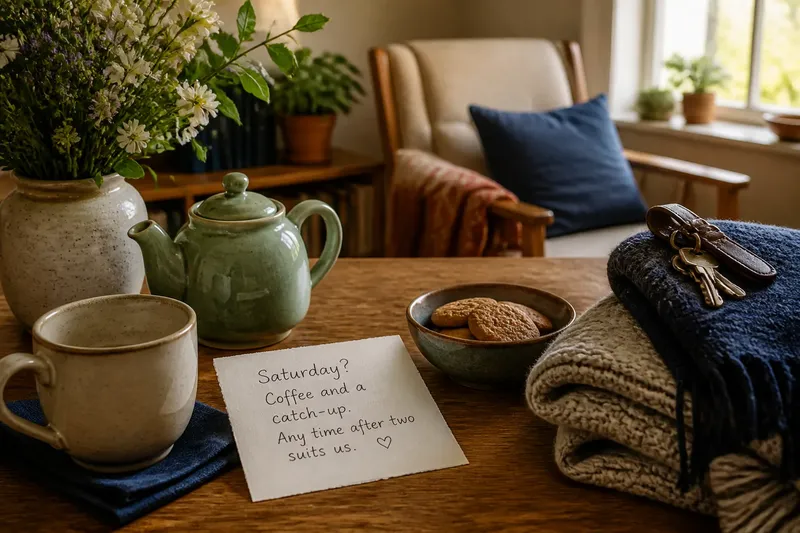
A useful invitation answers three quiet questions: who is coming, what the gathering is roughly for, and how open the timing is. It need not read like a booking confirmation. One clear sentence is often enough: “Would you like to come over on Saturday for coffee and a catch-up? Any time after two suits us.”
The phrase “any time after two” is generous only if the host really means it. If a narrower arrival window would make the day easier, say so. Guests generally prefer a plain boundary to the subtle drama of wondering whether they have arrived too early.
Say you have invited a friend who is caring for a young child and may not know exactly when they can leave home. You could suggest a broad afternoon window and add that a message on the day is fine. The expected result is a visit that can happen without making punctuality the main event.
Time without ceremony
A visit does not need a programme, but a small point of orientation helps people settle. Put the kettle on, offer a place for coats, and mention whether you had something in mind or were hoping simply to talk. A cup and saucer is a poor timetable, but it does at least give someone something to hold.
When the invitation includes a meal, be specific about the level of contribution expected. “Come for supper; I’ll make soup, and you can bring bread if you like” is clearer than “Bring whatever,” which can send a guest into needless negotiations with a bakery shelf.
For a more open gathering, tell guests whether people may arrive at different times and whether they can bring someone else. This matters less as etiquette than as simple coordination: a friend who assumes they are invited to bring a partner may otherwise have to ask at the door of the plan.
Company in the room
The shape of the room affects how a visit feels. Two chairs angled towards one another suggest conversation; a table with room to set down mugs lets people gather without a formal seating arrangement. A home need not be staged, but moving a stack of post from the only clear surface is a small kindness to everyone’s elbows.
Different guests need different openings. A new acquaintance may appreciate a question about how they know the host or whether they have been to the neighbourhood café. A close friend may be glad to arrive mid-story. The host’s job is not to conduct the talk, only to give it somewhere to start.
Shared tasks can soften an otherwise stiff arrival. Asking a guest to choose between two teas or help carry a bowl to the table offers a modest way into the room. Keep the task optional: an invitation to visit is not a shift with refreshments.
Small signals of welcome
Unhurried hospitality is often made from practical details rather than elaborate preparation:
- Give a recognisable arrival window. Choose a period that fits the day, rather than leaving guests to guess at the hour.
- Name the general plan. Say whether you are thinking of coffee, a simple meal or a catch-up with no particular activity.
- Explain the food arrangement. If guests need not bring anything, say so; if a contribution would help, make it a specific, easy request.
- Make the entrance straightforward. If the doorbell is temperamental or the entrance is shared, tell visitors what to do when they arrive.
- Keep a place to sit clear. A spare chair or space at the table can matter more than a polished room.
- Leave a natural way to finish. Mentioning that you have the rest of the afternoon free, or that you will need to head out later, gives the visit a sensible edge.
These details are not a formula. They are the social equivalent of leaving a clear patch on the table: a little room for the other person to arrive as they are.
When plans change?
How long should a weekend visit last?
Let the invitation set a reasonable expectation, then let the conversation decide whether to stretch it. If you have a firm finish in mind, mention it before the visit rather than waiting until a guest is halfway through a story.
Should guests bring something?
Guests can ask, and hosts can answer plainly. If the host says nothing is needed, a small token is optional rather than an obligation; if food is part of the plan, agree on a useful contribution instead of creating a surprise menu.
What if someone arrives late?
If the timing was flexible, treat a delay as part of the arrangement and send a brief message if it affects food or access. If the visit was tied to a specific booking or meal, a quick update helps the host adjust without guessing.
How can a host end the visit kindly?
Use a direct, ordinary cue: say you have enjoyed the catch-up and need to begin the next part of the day. Guests can help by noticing that cue and gathering their things without requiring a closing ceremony.
Room for another time
An open invitation works best when it is genuinely open in one respect and clear in the others. The host might leave the activity undecided while still naming a day and a likely arrival window; the guest can then accept the company without having to solve the whole afternoon.
For a weekend visit, the changing weekend visit is not a contest between old rules and new ones. It is a practical exchange: a clear invitation, a willing arrival and enough shared attention for the visit to become its own occasion. When the door closes, a simple “That was lovely; let’s do it again” can carry the welcome forward without scheduling the next meeting on the spot.